Understanding Risk: A Simple Guide to Diversification and Asset Allocation
Investing always comes with risk. No matter how safe a stock or fund seems, there’s always the chance of losing money. The key for long-term investors isn’t avoiding risk entirely—it’s managing it wisely. Two of the most effective strategies for doing this are diversification and asset allocation.
In this article, we’ll break down these concepts in simple terms and show how they can help protect your investments while maximizing growth potential.
What Is Investment Risk?
Investment risk is the possibility that the value of your investments will fluctuate, and in some cases, you may lose money. Risk comes in different forms:
-
Market risk: The overall market may decline, affecting nearly all investments.
-
Specific risk: A single company or sector may underperform.
-
Inflation risk: Your money loses purchasing power over time.
-
Interest rate risk: Changes in interest rates can impact bonds and other fixed-income investments.
Understanding risk is the first step to managing it.
What Is Diversification?
Diversification means spreading your investments across different types of assets, sectors, and geographic regions. The idea is simple: don’t put all your eggs in one basket.
Why diversification matters:
-
Reduces the impact of a single investment’s poor performance
-
Balances risk and reward
-
Helps smooth out volatility in your portfolio
Examples of diversification:
-
Owning stocks across different industries (tech, healthcare, consumer goods)
-
Investing in both domestic and international markets
-
Adding bonds, real estate, or commodities to your portfolio
A well-diversified portfolio can reduce losses during downturns while still capturing growth over time.
What Is Asset Allocation?
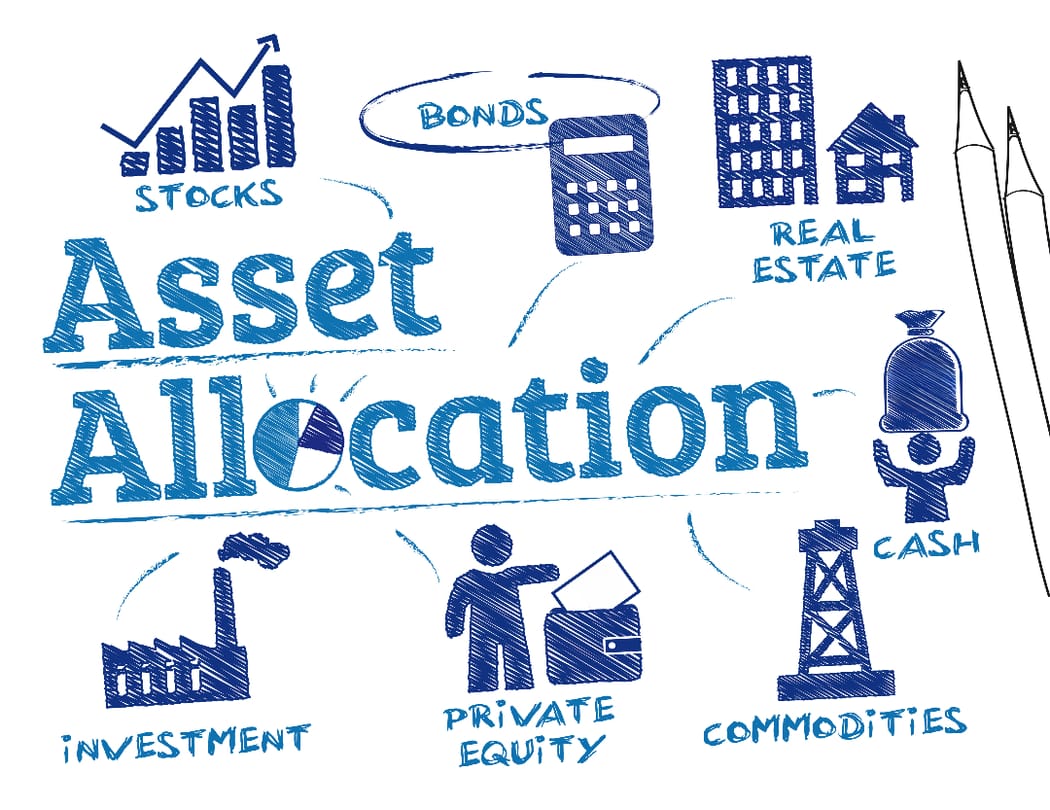
Asset allocation is deciding how much of your portfolio to invest in different asset classes, like stocks, bonds, or cash. Unlike diversification, which is about spreading investments within a class, allocation is about spreading across classes.
Key principles of asset allocation:
-
Stocks generally offer higher growth potential but more volatility.
-
Bonds provide income and stability but lower returns.
-
Cash or cash equivalents are safe but earn minimal returns.
The right mix depends on your:
-
Time horizon: Longer horizons can handle more stocks; shorter horizons need stability.
-
Risk tolerance: Some investors are comfortable with more volatility; others prioritize safety.
-
Financial goals: Retirement, buying a home, or building wealth each requires different strategies.
Putting Diversification and Asset Allocation Together
Think of asset allocation as the blueprint of your portfolio and diversification as the details inside each category. Together, they:
-
Reduce the risk of significant losses
-
Improve the chances of steady long-term growth
-
Help you stay invested even when markets fluctuate
For example, a balanced portfolio might have:
-
60% stocks diversified across sectors and regions
-
30% bonds diversified by type and maturity
-
10% cash or short-term investments for safety and liquidity
This structure allows your portfolio to grow while cushioning against major downturns.
Tips for Managing Risk
-
Rebalance regularly: Adjust your portfolio to maintain your target allocation as markets move.
-
Avoid chasing trends: Stick to your strategy rather than reacting to market hype.
-
Consider low-cost index funds or ETFs: They offer built-in diversification.
-
Keep a long-term perspective: Short-term fluctuations are normal; focus on long-term goals.
-
Understand your risk tolerance: Choose investments that match your comfort level to avoid panic selling.
Risk is an inherent part of investing, but it can be managed with smart strategies. Diversification and asset allocation are not just financial jargon—they are practical tools that help you grow wealth safely over time.
By spreading your investments across different assets and maintaining a balanced portfolio, you protect yourself against volatility, reduce emotional decision-making, and increase the likelihood of achieving your financial goals.


Comments
Post a Comment